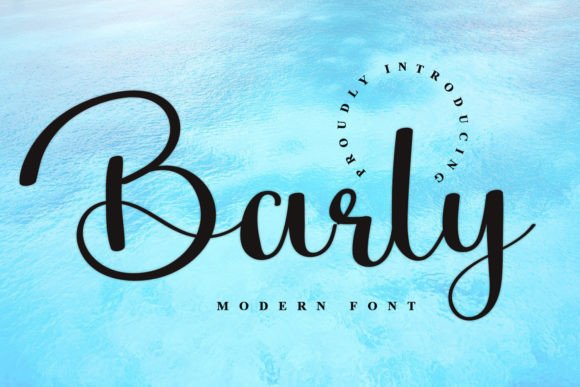
Barly: A Font That Breathes Life Into Your Handmade Creations
What Makes Barly Stand Out?
Its versatility is one of its greatest strengths. Barly works beautifully on both digital and physical products. I've used it on printable wall art, seasonal tags, and even on the packaging for my handmade soap bars. The font’s clean lines and graceful flow make it ideal for short phrases, names, and titles, but it also holds up well for longer text when paired with a complementary sans serif font.
Real-World Uses for Barly in Handmade Products
- Candle Labels: Barly adds a personal touch to my candle labels, making each product feel like a small piece of art.
- Wedding Invitations: I recently designed a set of wedding invitations using Barly, and the font helped create a romantic and elegant mood.
- Stickers and Tags: Whether it's for a boutique or a seasonal craft, Barly looks great on small stickers and tags.
- Planner Pages: I’ve used Barly on planner pages for a custom line of printable organizers, where it adds a stylish flair without overpowering the content.
- Wall Art: For my printable wall art collection, Barly helps create a modern yet classic aesthetic that appeals to a wide audience.
When working with Barly, I always consider how it will look in different sizes and formats. On small stickers, I ensure the font remains legible by using a lighter weight or adjusting the spacing. For larger prints, like signs or banners, Barly shines with its bold and decorative elements.
Pairing Barly with Other Fonts
While Barly can stand alone beautifully, it often works well with other fonts to create balance. For instance, pairing it with a clean sans serif like Montserrat or a simple serif like Playfair Display creates a harmonious contrast. This combination is especially effective for designs that require both elegance and readability, such as greeting cards or product packaging.
For more playful designs, I’ve paired Barly with another script font or a handwritten font to add depth and texture. When creating digital templates or printable assets, it's important to test these pairings across different devices and screen sizes to ensure consistency and clarity.
Design Tips for Using Barly Effectively
When using Barly in your handmade projects, keep these tips in mind:
- Check File Formats: Make sure you have all the necessary file formats (OTF, TTF, SVG) for your design software and printing needs.
- Test Readability: Always test Barly on small stickers, labels, and product tags to ensure it remains legible at smaller sizes.
- Use Ligatures and Swashes Wisely: These features add character, but they should be used sparingly to avoid clutter.
- Consider Multilingual Support: If you plan to use Barly internationally, check if it supports the languages you need.
- Licensing Matters: Before selling any templates, printables, or merchandise, confirm that you have the proper commercial license for Barly.
These considerations help me maintain a high standard of quality and professionalism in my handmade creations, ensuring that every product I offer feels intentional and well-crafted.
Bringing Barly to Life in My Shop
Now, Barly is a staple in my creative process. From designing seasonal tags to creating mockups for my Etsy shop, it consistently brings a sense of creativity and authenticity to my work. I’ve even used it for a few custom logo designs and social media graphics, helping to build a cohesive brand identity that resonates with my customers.
Whether I'm preparing a new batch of printable wall art or testing a sticker sheet, Barly feels like a trusted companion. It adds a level of polish and personality that makes my products stand out in a crowded market. And most importantly, it allows me to express my creativity in a way that feels true to who I am as a maker.